Disability and disclosure

secret-1142327_960_720

I have a secret. I won’t tell it to you, because I have a right to tell people when and if I want to. But then, what if I don’t have a choice? What if it’s really sunny and I don’t know where I am? What if I can’t read the task we are meant to do? Then I have to tell you. Even though my eyesight is my business, sometimes I have to make it known to others. There are occasions, where I have not had the energy to tell people and I look completely disengaged with tasks instead!

To me, disclosing my disability used to mean making myself vulnerable. I am telling people that I am different, and that can be hard – it takes a lot of energy! When I tell someone about my visual impairment, that is letting myself be real in front of them. I don’t know how they will use the information. I just have to trust that they don’t abuse it. For me telling someone, still involves a big discussion in my head – weighing up the reasons for (or not for) telling someone. It often comes down to how much I feel I need help and how stubborn I am being! I remember telling a course trainer once, and she then starting treating me like a 5 year old – it was so embarrassing!

Sometimes there isn’t any opportunity to tell someone I can’t see, because I don’t want to use a symbol cane (like the mobility trainers wanted me to!). People often swear at me from their cars, when I cross the road (because I sometimes cross at bad times… not just randomly!), or get annoyed at me for bumping into them on the pavement. I feel so awful after stuff like this happens, but sometimes I get angry too. Like when; there is a cycle lane on the road, but bicycles are zooming on the pavement, when I am meant to interpret the results from a coloured chart, or when people start showing me things on a tiny laptop.

Over the years, I have become more open about my visual impairment, as I have become more confident in myself. It has helped me to feel more like myself, and less like I am pretending to be something or someone that I’m not. I think it comes down to me being happy with who I am, and not feeling guilty or apologetic about it. This is a long process! I hope I get to the point where telling people I am visually impaired, is not a big deal for me. It helps me to remember that, everyone has something they need some support with (whether that be a shoulder to cry on or a hand with the stairs!), but needing support doesn’t mean you can’t help others.

Oh – it seems like it’s not a secret after all.
Disability and… what mine is

IMG_20160507_150357(1)

People always ask me, so what can you actually see? There is a scientific explanation of course (which is here: http://www.aapos.org/terms/conditions/10 ), then there is my simple explanation (I have said this so many times I’ve got it down to a fine art!). It goes like this: You know you have cones and rods in your eyes? Well my cones – I don’t have enough of them and the ones I do have, don’t work properly. Cones help people see things in focus and in daylight. So this condition affects my day vision, (so seeing things outside in bright light is really tough – my eyes are often half closed – a good look!) seeing things in colour (it’s hard to tell what colours are and differentiate between them, but before you ask, I can still have a favourite colour – blue) and seeing things in focus.  I also have a shaky eye and generally just need to look closer at stuff, to see things people with full vision normally can.

So that is me – my condition. I have had it from birth. It is all I have ever known. I have no objective way of knowing what fully sighted people see and I do wonder, probably just as much as people wonder about my sight! I know I can see more than someone with no sight and less than someone with full sight. This means I am in some kind of huge in-between. So how much can I actually see? Honestly, I don’t really know. When you live your life only seeing from one pair of eyes it’s hard. How do I know that I am not fooling you all? I sometimes wish I could just see with a pair of fully sighted eyes – just to see how different I am. I want to know how much I actually compensate for my lack of sight. I know I use my memory a lot (when you do a route every day, surprisingly enough, you don’t really need to see where you are). There is also good old social conditioning; from birth I have been told the sky is blue. So when someone asks me the colour of the sky, why wouldn’t I say blue?! Just like the grass is green and blood is red. It’s not only sight that can help a person see. If I close my eyes, I can still hear footsteps, I can remember where my room is and I can still feel the heat coming from a candle.  I know I use these things to help me make up for my lack of sight – but I still want to know HOW MUCH!

So now you all know what my disability actually is. You know I feel like I am in this massive group of people, with some functional sight. But you don’t know this often means that I feel like I can’t fit into a group. Maybe I was never meant to fit in, but maybe sometimes that’s all I want.

Next post will be no later than two weeks away. I have already started writing it!

Disability and… Discrimination. (Guest writer: Shivanie Bhadresa)

IMG-20160417-WA0007

For many years, my disability just wasn’t a thing to me, it was just something I had and I just got on with it. It only started to become a massive insecurity for me recently. 

I was with someone who didn’t have a problem with my sight himself, but as soon as he told his parents about me, their reaction was that I would not be able to live a normal life and that I would be a constant burden. They thought that if I can’t see, I would not be able to manage a home, or look after children. I felt like I was trying to prove myself; even though I really shouldn’t have to. I studied at a mainstream school, went to a mainstream sixth form, went to university and have been working consistently since I graduated. I have never, ever let my disability get in the way of anything I wanted to do, and this relationship made me feel as though I couldn’t do things everyone else could do – even though I am really bloody independent! I stopped dating him because I deserve better than that.

I work as a support worker – so I support people who have needs surrounding mental health, physical health, learning disabilities, substance misuse, domestic violence, housing and benefits. A client called up our duty line recently and spoke to one of my colleagues as he wanted to complain about the support I am giving him. I really do not mind if clients complain about me – it is good learning experience. However, this client is aware of my disability and when he spoke to my colleague, he said that I was helping him fill in a form and I had to look extremely close to the form because I couldn’t see it properly. When he followed on to make a proper complaint he told my other colleague that due to my disability, I am not supporting him properly. I know that what he said was wrong and he knew it was discriminatory, but it made me wonder, is there something wrong with me? Maybe these people are right. Maybe I am not able to manage the same way everyone else can.

After reflecting on these events, I realised that people’s issues are nothing to do with me, and everything to do with them. I am far from perfect, but then again who is? My disability is just part of who I am, it does not mean I am unable, and this applies to everyone, whether you have some sort of diagnosis or not. Nobody should ever make you feel like you are invaluable or inadequate, nobody has that right. If someone starts pinpointing things that are “wrong” with you – do not let them. I wanted to share this with you all, to say these experiences affected me when I let them. You are all stronger than you know, do not let them affect you.

I will leave you with my favourite quote:

    “Our deepest fear is not that we are inadequate. Our deepest fear is that we are powerful beyond measure. We ask ourselves, who am I to be brilliant, gorgeous, talented, fabulous? Actually, who are you not to be? Your playing small does not serve the world. We are all meant to shine, as children do. And as we let our own light shine, we unconsciously give others permission to do the same”

Disability and…performing

performing

Performing is scary at the best of times (at least for me). To go out in front of people where I am the prime focus is petrifying. I have performed as part of my choir several times, but that did not prepare me for my drama performance yesterday.

I have been working with a drama group for a few months and yesterday was our performance in a London theatre. The performance was essentially looking into the unexpected moments that come with sight loss; these are moments in everyday life that people may not always think about. I was nervous all of yesterday until the performance, like I had a stampede of animals running all over my tummy, not just the normal butterflies. I think this is because I felt like this performance would leave me exposed and vulnerable. I was sharing a story about my life, and it felt like there was more at stake because of this. It is very different from when I perform in a choir, as we are singing songs about other people to a well-lit crowd. It is hard to spot my husband. My friend will either tell me where he is or he attracts my attention in some way, but I am always squinting to see if I can spot him! In this drama performance, I liked that:

  • The lights were so bright I couldn’t really see anyone in the audience (so there was no point in me even trying to squint) and also the fact that there was dark, apart from these lights shining on me and my fellow actors.
  • At the end – the members of the audience shouted out their names, line by line.

Not being able to see the audience properly was almost freeing to me. I liked the fact that I couldn’t make eye contact with my husband or my friends (apart from when I was running around in the audience!) which took off a lot of pressure. Regardless, I was worried that, because the performance was full of different sketches, not all of which I even understood, people wouldn’t get it (Context: I didn’t want to make a complete prat of myself). Oddly enough, people really enjoyed it and it obviously left an impact as I got so many questions about what different sketches meant and lots of praise. I am not used to that kind of praise.

I am buzzing, still buzzing from our performance yesterday. I can’t quite believe that we all did so well, and I actually feel rather proud of myself. Seeing as I am not the most confident person this isn’t a normal feeling, so I am just going to enjoy it while it lasts 🙂


Disability and …. Children

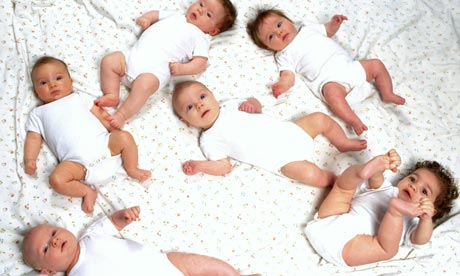
Newborn babies

I love children and at some point I would like to have kids (I am sure my husband knows this and won’t run away/scream). I think I get on more with children than I do adults! Children bring a smile to my face. As I get older, a lot of friends and family are now having kids. This is awesome as I have more kids to play with (and hand back to their parents when things get tough). But, as much I love kids, I am (slightly) petrified of having kids in the future (if that is God’s plan for me). Why?! I hear you cry… well here’s my list:

  1. Not being able to keep them safe. I am so scared of leading a child accidently into danger in situations where my sight isn’t 100% (unfamiliar surroundings, bright light etc.).
  2. Not being able to see if they are sick. I am scared that I won’t be able to spot when a baby has a rash or scratch or anything like that.
  3. Hurting them. I don’t want to accidently bang their head when I miss a step or bang into a table or a chair.

As I think about having children, these worries seem very real to me. I never even thought I would be worried about these things before, because I was just excited about having children and now the responsibilities do scare me, even more so when people have started asking when I am going to have kids!

I have talked to my friends about this as I have been quite anxious about it. They all tell me not to worry. I think I can apply a lot of my common sense to looking after a child. So for my three worries above, I have answers:

  1. I may not be able to see, but I am able to know when I need help or when I don’t need help. I will obviously be even more risk averse with children – so I need to consciously be aware of that.
  2. If a baby gets sick. The signs aren’t only visible. A baby can show other signs that they are ill, for example, crying their frigging heart out or have a temperature.
  3. Again, I think I will be more risk averse and ensure that people don’t go moving things in my familiar surroundings so I know where, for example, the cat food bowls are!

In conclusion, like with anything else, sometimes my anxieties make the problem a lot bigger than the reality. Luckily, I have rational, helpful friends to reassure and support me. I also know that there are plenty of visually impaired parents who can give me tips for taking care of kids. I just need to remember that being visually impaired does not mean I can’t be capable of being the most awesome parent. Another question I need to ask myself is if I love kids so much, why am I not working in a Nursery?!

So people, what are your experiences? Thoughts? Do you want children? Are you scared of similar things? Are you a visually impaired parent? Your stories are wanted and welcome 🙂 

Disability and … expression

EXPRESS YOURSELF

By profession, I am an analyst. We are typically known for being clever (well, most of us), but not so much for our communication skills! I don’t think my job really allows me to express myself very well. People, who know me, know that I have a lot of energy. I constantly want to put this energy into good use, which is one of the main reasons I started this blog.

Expressing myself is very important and it is something I have been typically scared of doing. I am scared to let myself stand out in the crowd, even though I am a loud character. I hold myself back from being… well ME quite often, because I get anxious. When I am meeting new people, I am already using so much energy trying not to draw attention to my disability (i.e. when trying to make a coffee, I hate fancy machines), so I haven’t got the energy for conversation or it is just not a priority.

Writing this blog has definitely helped me to be true to myself, it gives me an outlet to consider my life and reflect on my feelings. Through promoting this blog on twitter, I found acting workshops for visually impaired people which finish with a performance. I don’t have many friends that are visually impaired, and have never felt like I have fit in with a big group of normal or disabled people, but the people I have met during these workshops have helped me to see how easily I can fit into a group. I feel so comfortable with the people there and have been able to share some really personal experiences. The way I have felt performing and acting with them has been unbelievable. It has helped me to develop my sense of self and it is such a buzz.  The people at the workshops have all inspired me; the challenges they have overcome and they are all still smiling.

Expressing myself has been so important. I can’t have a week where all I do is work and sleep, it’s boring! These workshops have given me something to be excited about, and a few hours in the week where I can feel happy and comfortable in a group. This has been awesome, and I wouldn’t have been able to do anything quite like this without my disability. Disability did good.

Disability and … sadness?

IMG_20160215_073010(1).jpg

Having a disability has meant I have always wanted to be the strong one. I felt that in some way it was compensating for something I don’t have a lot of (sight!). I always wanted to be a person that people can rely on, and more importantly, not rely on others! I never liked feeling upset and I thought crying showed weakness.

When I met my husband (who is a lot more in touch with his feelings than me), he taught me it was ok to rely on other people, It was ok to be sad and most importantly, it was ok to expose yourself to others (no, not in that way!). Showing people who you are and opening up to them is a good thing. Over the years, I have done this and it has helped me develop as a person. I have such a good support network and that is really what keeps me going.

So this is me ‘opening up’. I have had a tough week. Work was busy and I have just felt slightly emotionally unstable. This happens to me sometimes – I get ups and downs. When I am like that, I focus on the negative and I beat myself up for a lot of things. I remember going to a job interview about a year ago feeling like this. On the way, I tripped outside the building. I remember crying and thinking “how do I expect to get a promotion if I can’t even walk into a building without falling?”. I remember saying to myself “No matter what I do, no matter what I achieve, I will always be disabled”. I have never told anyone that, not even my husband. He will be spell checking this blog. I bet he will cry! I have been doing this drama workshop thing for visually impaired people recently. It has also helped me ‘expose’ myself to other people. I was asked to do a piece about being really happy and being really sad. I was so nervous. When I did it, I realised that I tend to live my life in extremes, that is who I am. It was liberating for me to let other people see it, and feel it. I could tell they felt it.

So I am writing this because I am feeling sad. I think the point of this one is that I am trying to tell people even the happiest people can be sad, and that being or feeling sad isn’t weak. Sometimes, being strong is knowing when you are weak and ask for help. Just remember people (on the whole) are awesome.

Much love people.


Disability and …travel (New York)

IMG_20160131_184803[1]

When I can’t rely on knowing an area (at least not very well) getting around places can be very difficult. I have never been to New York, so I had no idea how to navigate, and even though I was with my husband, there were times I did struggle to acclimatise. Here are my NYC stories.

Subway….

New York has a very developed subway system, trains are 24 hours (which feels like a pipe dream for Londoners!) and there are signs at a height which I can actually see. New York subways have big walking maps, which is handy for when we were out. They have (like we do in England) seats reserved for disabled people on the subway, but all the seats don’t have cushions. People were friendly when we got lost on the Subway (which happened quite frequently – a mixture of overconfidence and improvement works on the track). Disabled people who actually live in New York get discounted subway tickets too. This seemed rather good (although that doesn’t beat my TFL freedom passJ). Subway maps are available but they were too small and colour coded, this was unhelpful as I would have to rely on the husband, this amounted to varying levels of success (we missed a tour because of him!).

Getting there…

I haven’t been to London Heathrow for years. It was a nightmare. I can’t see the face of the security staff when I am waiting to go through – so unless they wave or shout at me, I wait. You can probably see them getting more and more irate. There are few signs, so once or twice I walked the wrong way and staff got annoyed at me. Once we were through security everything was a lot easier, I saw shops I recognised and I quickly acclimatised/spent money. JFK was similarly confusing, it could do with more people guiding you and more signs. The staff could also just be more efficient – security took ages.

Sights…

Going to New York in January is the best; there are no long queues for tourist stuff! Firstly this was great because I get stressed having to navigate through large crowds, but it also meant I could see everything as closely as I needed it to be! At the Ellis Island Immigration museum I could go up very close to the exhibits and they had audio tours. Broadway (where all the theatres are), do these ticket lotteries every day, where you can get cheap tickets for top shows. I managed to win some tickets for Les Miserables. I was scared that we would get random tickets at the back, but to my surprise we got tickets four rows from the front – I could (for once!) see everything (Disclaimer: Seeing everything for me doesn’t necessarily mean seeing everything. I mean, I can’t see faces, but I can normally tell who people are from their hair length, voice and body shape). I got some beautiful pictures when walking on Manhattan Bridge that show the sunset as we were walking across. My husband assures me the colours are beautiful.

IMG_20160131_183900[1]

Walking around…

So whilst there were many signs when walking around, something that really annoyed me (and this can also be a massive annoyance in London!) is unmarked steps. These are steps which have nothing to show where the step ends. I kept missing steps as they all merge into one. It drove me mad. I know it may not look as aesthetically good, but it’s a practical thing and surely EVERYONE would benefit from knowing where the steps end/start. Sort it out New York. The other thing I would be grateful for, as most of the roads are so wide (I can’t see the walking man) is some sound to know when it is safe to cross the road. I think I remember only one crossing where a speaker kept repeating ‘WALK’, but that was it. Sort it out New York.

Snow…

We were stuck in the BLIZZARD. I love snow, I love how pretty it makes things look and how kids (and my husband) seem to flock to play in it. While the snow was falling, husband and I went for a walk in Central Park and it was awesome. However, I have a complicated relationship with snow. When things are covered in snow everything looks flat to me, so I fall all over the place! When the snow is packed up and get icy – life is even worse. I am sometimes scared to leave the house when there is a lot of snow because of this, but it was so so pretty. See below for a snow- covered Central Park.

IMG_20160131_183647[1]

To sum up….

Travelling gets me to experience new things, I love it. However, I also want to be safe! Cities and countries vary massively in terms of accessibility. New York is one of the better places so far, but not the best.

Next blog in two weeks – speak then 🙂

Disability and … Sports

Sport photos

There are some things which a person is just bad at (I am sure everyone can relate!). Sometimes it might be knitting and other times it could be maths. I am really really bad at sports (my husband says this isn’t true but he is way too kind!), no matter how much I want it or try.

I will never be good at football and this makes me sad. I loved football at school, really loved it. I liked playing in defence, because:

  1. I like to tackle people.
  2. I like whacking the ball as far as I can.

I will always remember being excited for my football grade, and then getting an ‘E’ for it (at some point we should really talk about how school grade systems for PE don’t really take disability into account…). I was well below average and this just sucked. I still play football from time to time. I have had accidents though, I broke my leg playing football with some guys at university (leading to me being put on a bicycle, wheeled out of Hyde Park and put in a cab for the hospital) and I have had several direct hits to the head. I have also tried other sports. My husband and I play tennis in the park sometimes. As soon as the ball goes into the air I can’t see it. When we play I am either upset with him because he misses the ball on purpose, or upset because no matter how hard I try, I just can’t hit the ball. I tried out cricket and goal ball for visually impaired people. I really wanted to join visually impaired football but I couldn’t find any local team. Anyway, cricket was not good. I was the youngest there by far and the only woman. I went a few times but then gave it up.

All in all, my relationship with sports is somewhat varied. Sometimes I love it and most of the time I don’t. I wish that I could learn aptitude in such a thing! I sometimes wonder if I would have been a sports icon if I was fully sighted, but knowing that I have dire running skills (which I don’t think my visual impairment affects), it’s highly likely I would be just as bad! Luckily, there are other things I am relatively good at so I shall just focus on them. Maybe write a book or two instead 🙂

I am in New York next week. I am aiming to blog, but might be having too much fun. Have an amazing week

Disability and…Marriage

MARRIAGE

I have been married for a year and a half, so these are my initial thoughts. When we got married, we felt a new sense of responsibility that we didn’t really expect. I don’t think we realised he would also be taking on the role of carer. Of course, when we were together he took care of me, but it felt slightly different.

When we are out, my husband seems either to look after me too much or not enough. In both scenarios I get irritated, either because I want more independence or because I didn’t want to get that bump on my head. It’s quite easy to be annoyed when I have just:

  1. Banged my whole body against a lamp post
  2. Fallen on some ice
  3. Missed a few stairs

(All three scenarios have occurred).

Aside from the several bruises I have, I do like it that he seems to have overestimated my ability, either that or he isn’t paying attention (he daydreams a lot!). My husband has had to learn about fashion and make up. He comments on my eye liner and foundation! I ask if it is ok; he used to say ‘How am I meant to know?’, I now get ‘you need to put a little more eyeshadow on your left eye’. He has also developed his driving ability when public transport isn’t an option. This was hard for him, but he knew how much it meant to me. If he can drive, I also feel the independence from it.

Over the past few years I have become more accepting of people helping me. I liked not asking for help because I thought it made me vulnerable and I am a proud person. I have since realised that being able to ask for help when you (really) need it is a strength. So, my husband is my carer, but I think we are all caring for people in our own way. I care for my husband, my family and my friends.

Marriage to me is about working together, making the best of each other’s strengths and supporting them when they need it (also about loving each other of course!). I don’t imagine my marriage would be very different if I wasn’t visually impaired, I think the essence of the relationship would be the same. However, I definitely would not have met a random Norwegian man if my visually impaired friend hadn’t been living in university halls with him!

Happy New Year everyone! I hope everyone had a peaceful break.